In recent years, immortal cell lines, usually derived from cancer cells collected from patients, have become an important tool in biomedical research. In Immortality for two, white blood cells – lymphocytes – will be collected from both authors and transformed in the laboratory in order to acquire characteristics of immortality. Marta de Menezes will immortalize Luis’ cells, and vice-versa. This will be achieved using a viral vector to introduce oncogenes (cancer inducing genes) in the cells – something that is today a standard experimental procedure. This way two immortal cell lines containing the complete genomic information of the two people will be generated. The two immortal cell lines are derived from immune cells, which are involved in the body’s defense. Thus, those cells will reject cells from a different origin, in the same way a transplanted organ is rejected. Therefore, the final irony of the artwork is the realization that although the cell lines are derived from two individuals who like to be together and love each other, immortality comes at a price – and that price is isolation. Thus, the two immortal cell lines can only be together artificially, in the space where their digital video projections intersect. These cells will outlive the bodies from which they were originally derived and, in principle, it would be possible to clone a new body from the immortal cells.
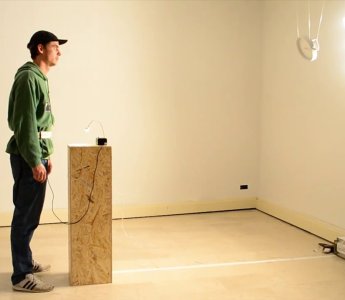
Immortality for two explores the concept of identity and the natural/artificial dichotomy, two issues that are recurrent themes in Marta de Menezes practice. It is also the first collaborative work with her partner, Luis Graça, a biomedical researcher in the field of immunology. The work is exhibited in an installation comprising documentation of the immortalization process, together with live immortal cells proliferating in tissue culture flasks, and microscope images of the two cell lines.