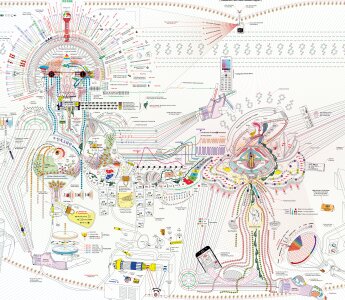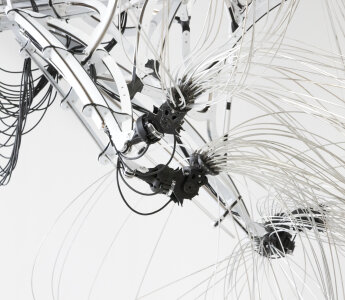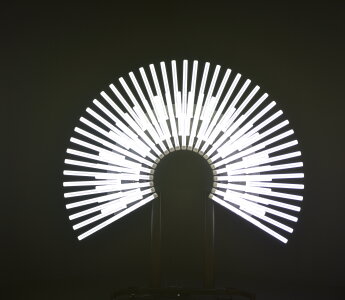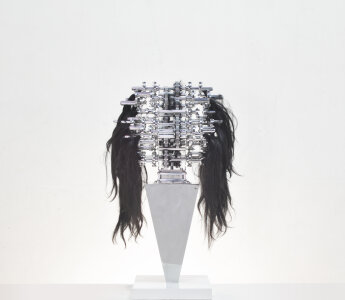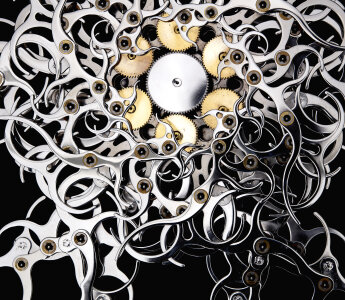
Distributed Web of Care, an ongoing artistic and research project by Taeyoon Choi, explores how the internet might be imagined and built through practices of care, accessibility, interdependence, and collective responsibility. Rather than understanding the web simply as technological infrastructure, Choi approaches it as a social and relational space, shaped by the people, communities, values, and forms of labor that sustain it.
The project considers alternatives to centralized digital systems and asks what a more distributed and equitable internet might look like. Bringing together ideas around decentralized technologies, accessibility, community organizing, and alternative forms of education, Choi questions dominant notions of efficiency, scale, independence, and technological progress. Care becomes both a practical method and a conceptual tool for reimagining the relationship between technology and the communities that use and maintain it. Choi asks, “The Internet is the largest computer that has ever been built. It is a global system of interconnected computer networks. There have been growing concerns about centralization of the Internet, censorship, surveillance and the lack of privacy. Can we create a distributed future that is built with trust and care, where diverse communities are prioritized and supported?”
Choi translates these ideas into a visual and poetic language through paintings, drawings, diagrams, and other media. Networks, interconnected structures, and organic forms evoke systems that are not fixed or hierarchical, but dependent on relationships between many participants. Ultimately, Distributed Web of Care invites us to see technology as a space for collective imagination, one that enables more accessible, reciprocal, and caring ways of communicating, learning, and coexistence.
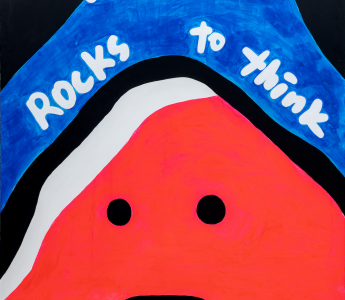
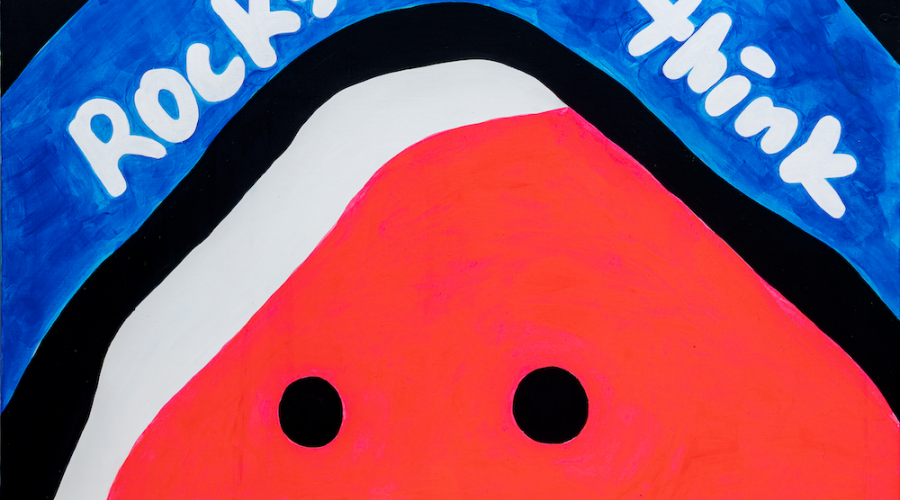
We Tricked Rocks to Think is a series of six illustrations that examines the limits of computation. One of the illustrations from the series will be presented as part of Device_art.
Taeyoon Choi’s interest in whether poetry could be written through computer programming led him to investigate logic gates and physics, prompting philosophical and ontological questions about the boundaries of computability. Everything can become a means of computation, he observes, but not every problem can be computed — an axiomatic system, for instance, cannot prove its own consistency. Choi is drawn to such limits of computation, suspecting that they mark the space in which only humans remain capable of acting.